Warehouse-native digital analytics

Data teams are adopting simpler, scalable architecture that makes it easier to govern data and provide self-serve insights via AI agents. See how Kubit gives new meaning to the "single source of truth".

Hero

The benefits of warehouse-native architecture

Kubit analyzes data and generates rapid AI insights without any of the trappings of traditional, siloed platforms. Your data is always up to date, with no data drift.

Eliminate the “data tax”

Legacy digital analytics have rigid integrations and pricing that quickly racks up costs. Kubit  supports scale by removing the need for extra pipelines and redundant copies, plus offers unlimited anonymous users.

  • No event limits Check
  • No anonymous user limits Check
  • No ETLs Check
  • No reprocessing costs Check

Avoid sampling

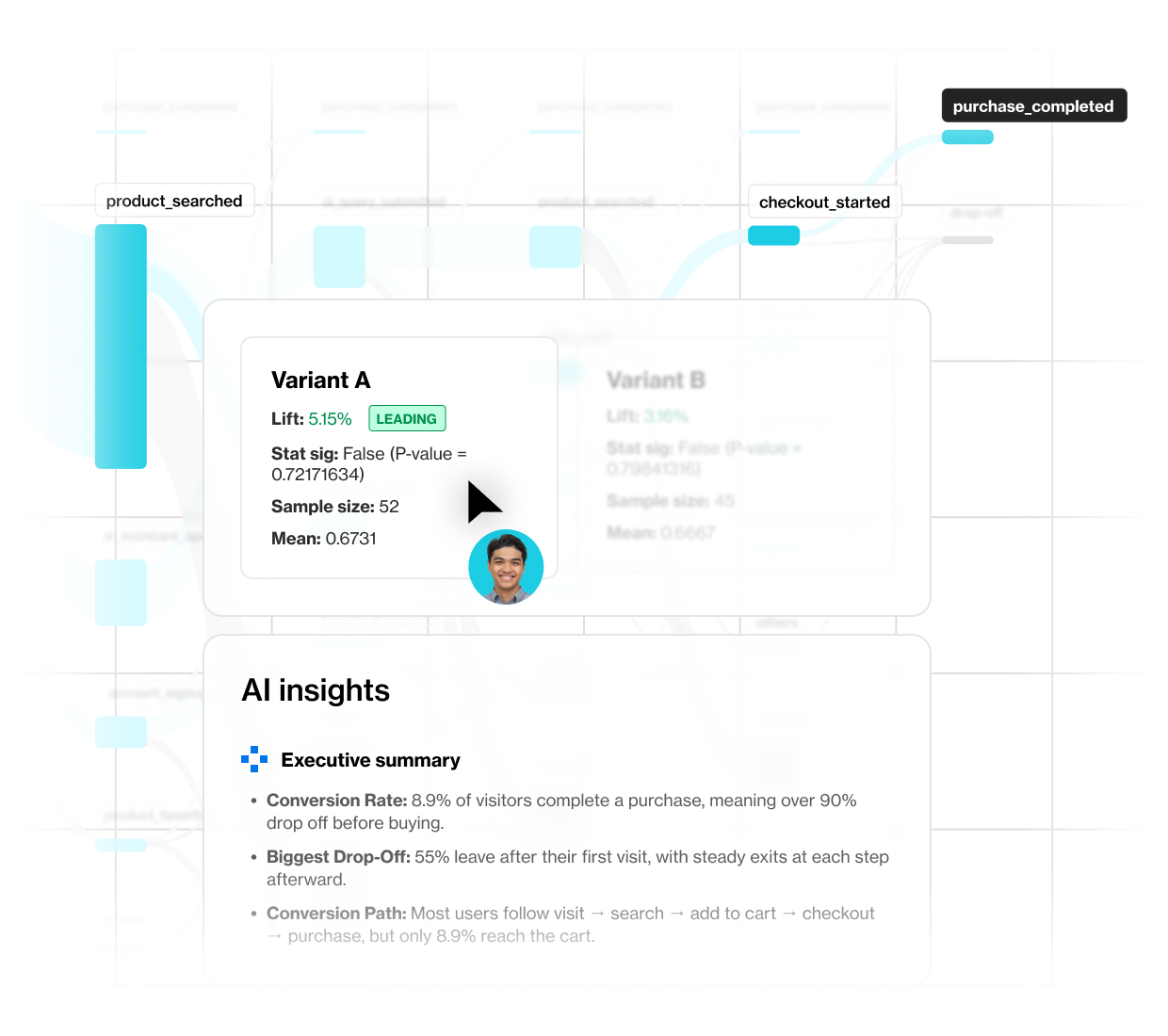
Sampling can control costs and improve performance, but at a massive tradeoff. Because Kubit is warehouse-native and doesn’t have to move or copy your data, it can handle volume without losing visibility.

  • Analyze 100% of your data, catch 100% of your issues. Check
  • Catch every anomaly, even rare edge cases Check
  • Trust A/B tests with complete, unsampled results Check
  • Scale without blind spots Check

Keep data safe and sound

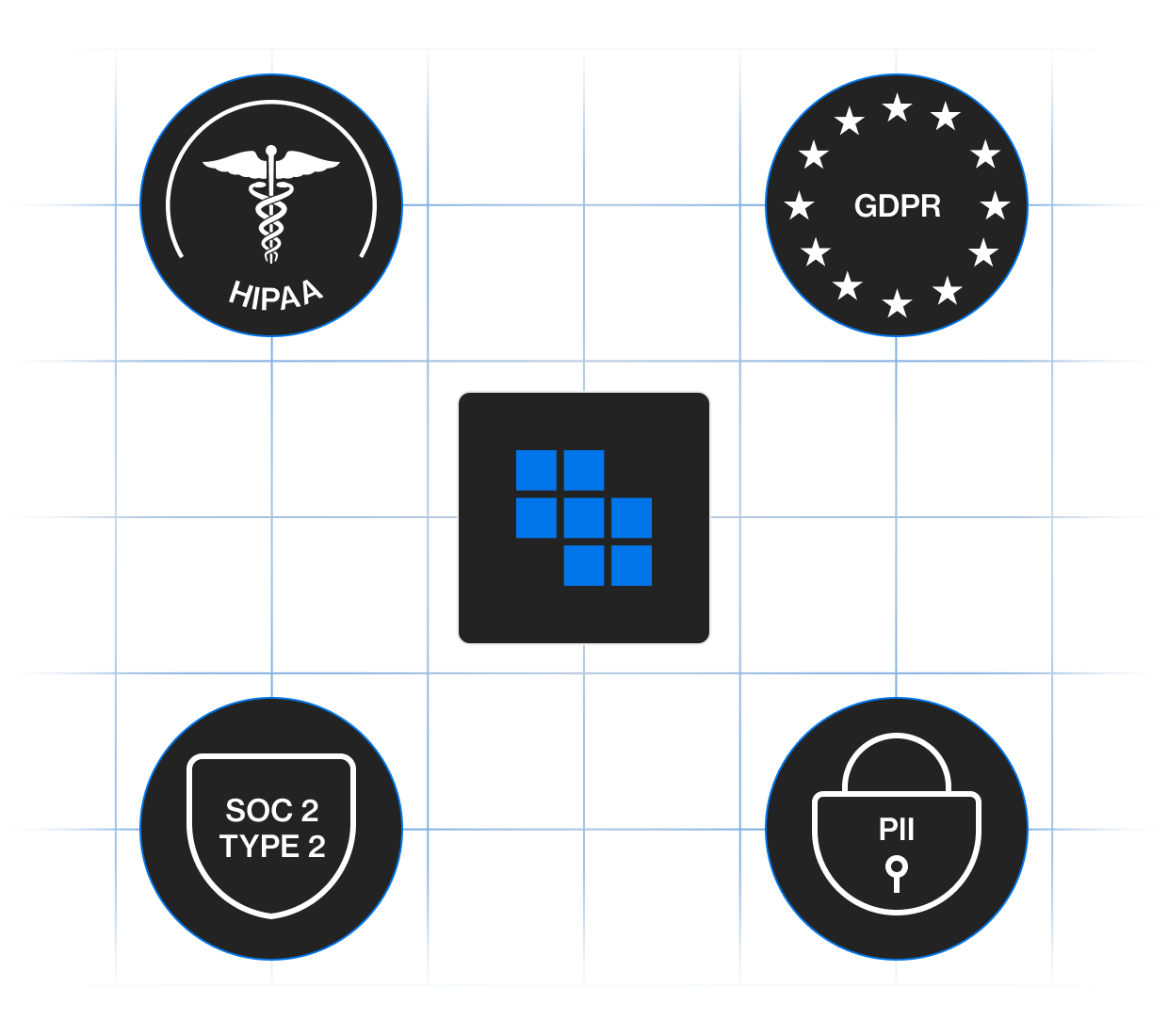
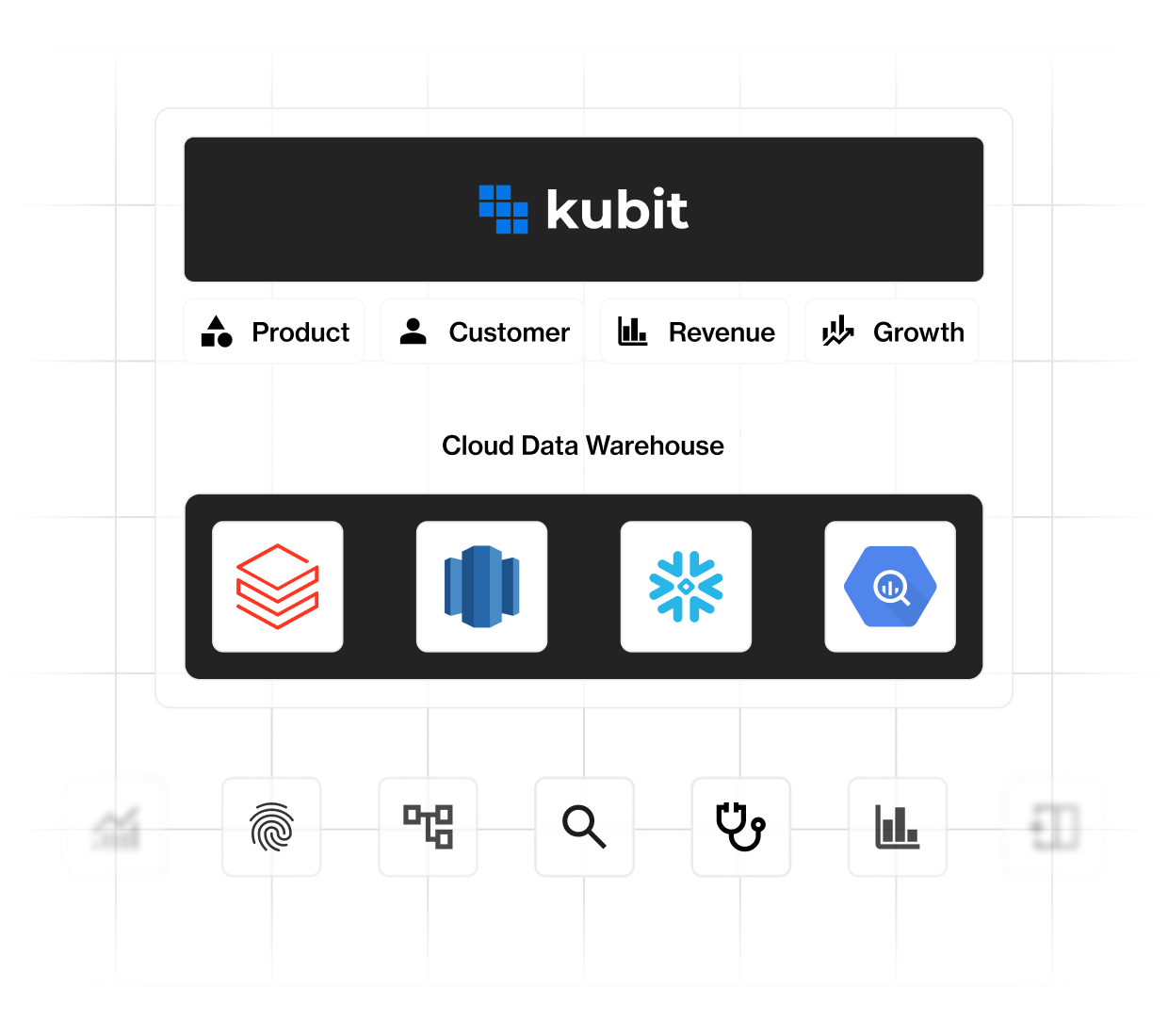
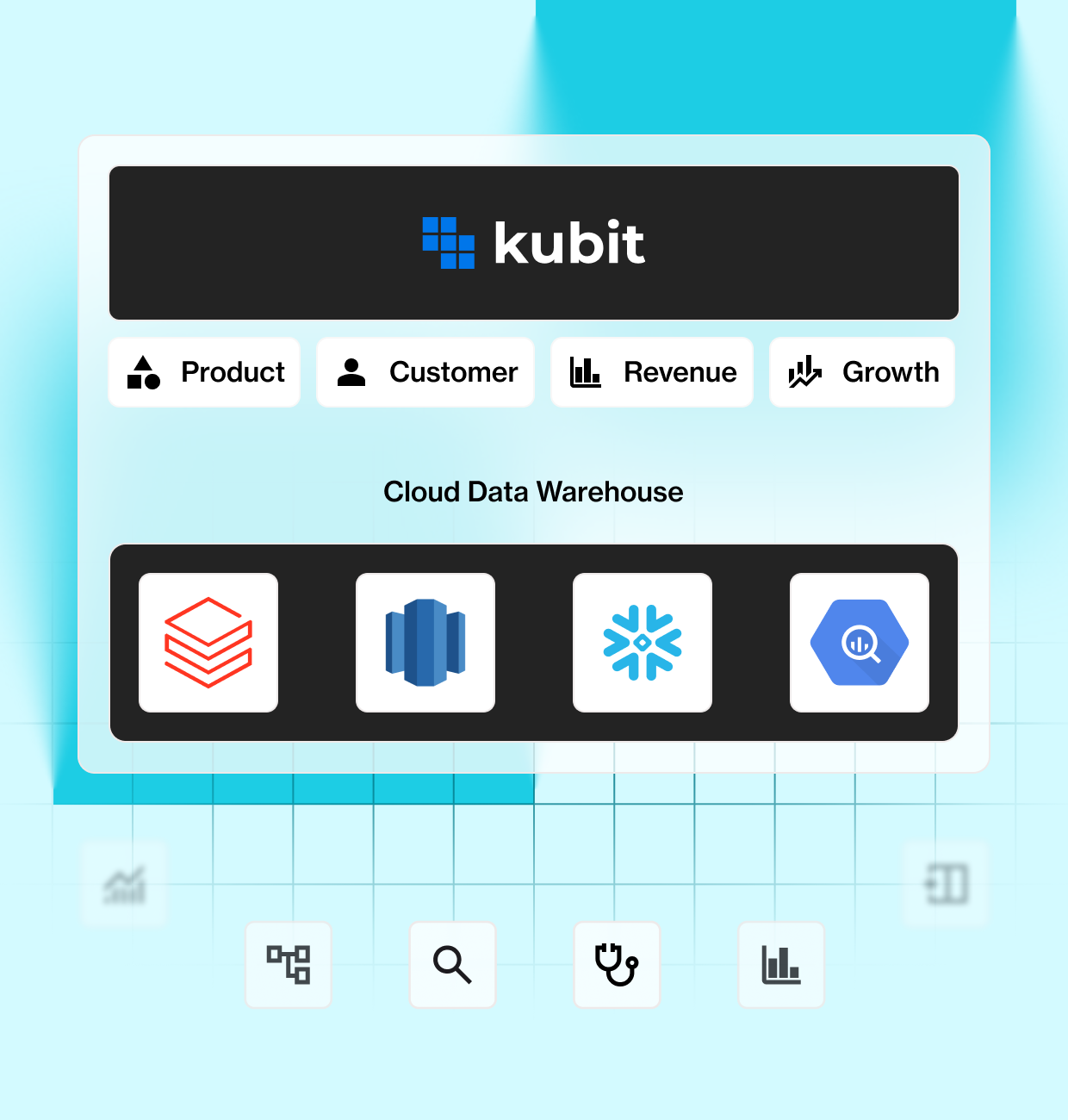
Zero-copy, warehouse-native architecture never requires data to leave the control of your warehouse. Maintain compliance and know exactly how your data’s being handled at all times with Kubit on Snowflake, Databricks, BigQuery, and any other CDW.

  • Meet GDPR, HIPAA, and SOC2 without additional risk. Check
  • Maintain compliance with zero data movement or copies Check
  • No PII exposure through third party pipelines Check

Verify answers instantly

Get clear answers and avoid costly mistakes with all of your customer, product, and digital experience data in a single warehouse. While legacy platforms use ETLs to move data between CDWs and their own proprietary silos, Kubit keeps it all instantly accessible and standardized in one place.

  • Trust your data - everything queryable in your warehouse Check
  • Eliminate "where did this number come from?" questions Check
  • Query live data, not last weeks stale snapshot Check
  • Debug data issues at the source, not in copies Check

Bring the compute to the data

Instead of building and paying for multiple pipelines, access your data directly as a single source of truth. Kubit’s approach to data is simple, scalable, and less prone to error than legacy ETL-dependent architecture. 

  • No data duplication or reprocessing fees Check
  • No limits on the data you can analyze and retain Check
  • No surprise costs or overages based on the number of events Check
  • Improved security with complete control and visibility Check

How Kubit’s warehouse-native platform works

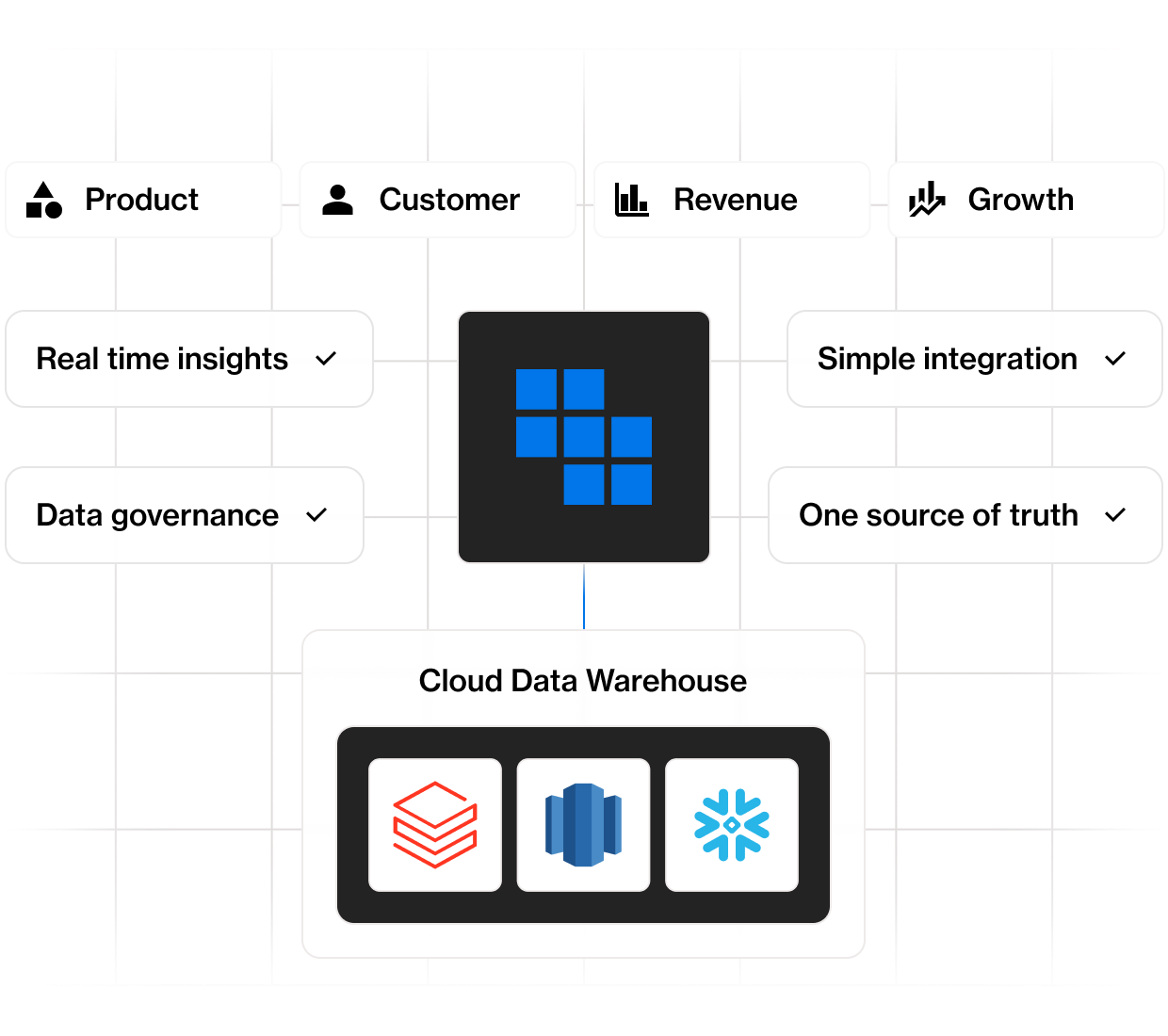
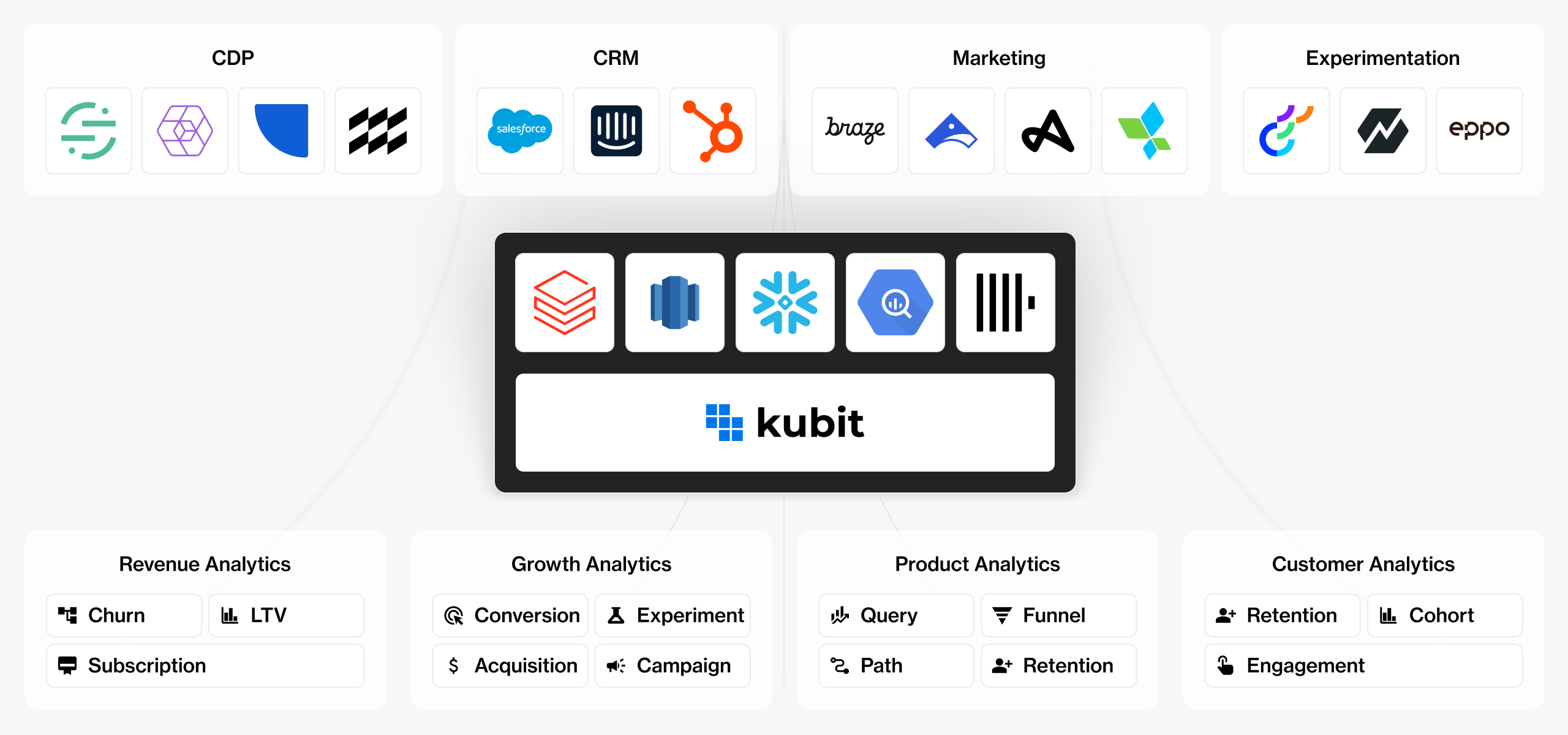
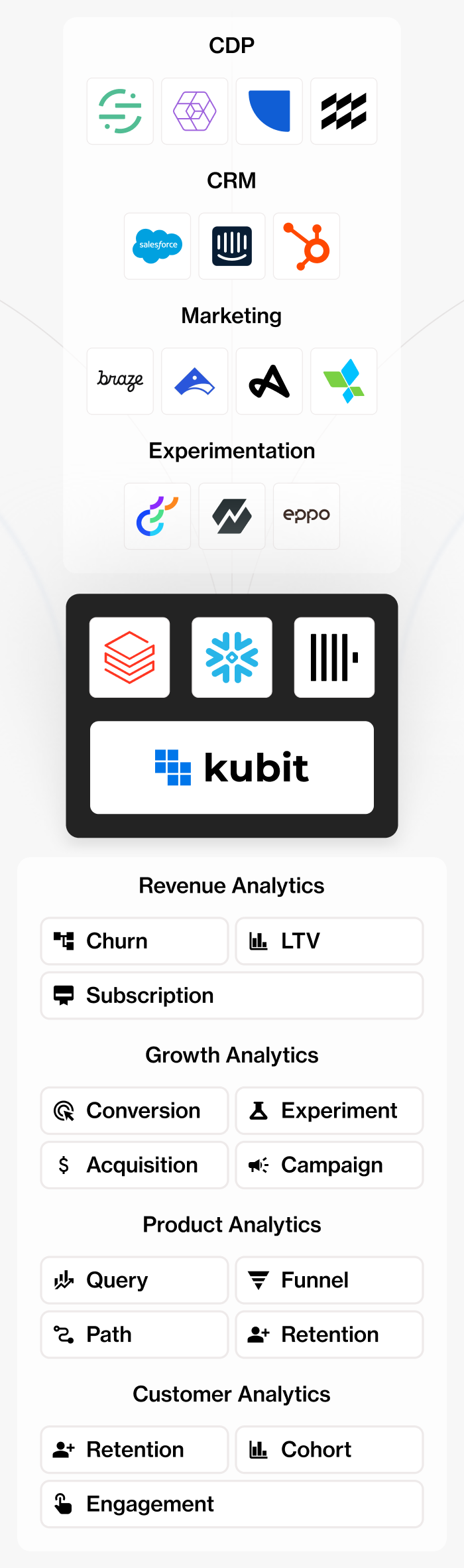
Traditional BI and analytics solutions use fragile pipelines and multiple copies of your data to piece together a picture of your business, making risk and governance hard to manage. Instead, Kubit executes your queries quickly and accurately directly from your cloud data warehouse. Explore and dig deep into your data using the latest AI tools and tech without ever giving up control.

How Kubit’s warehouse-native platform works Hero

Connect directly to your cloud data warehouse with Kubit integrations.

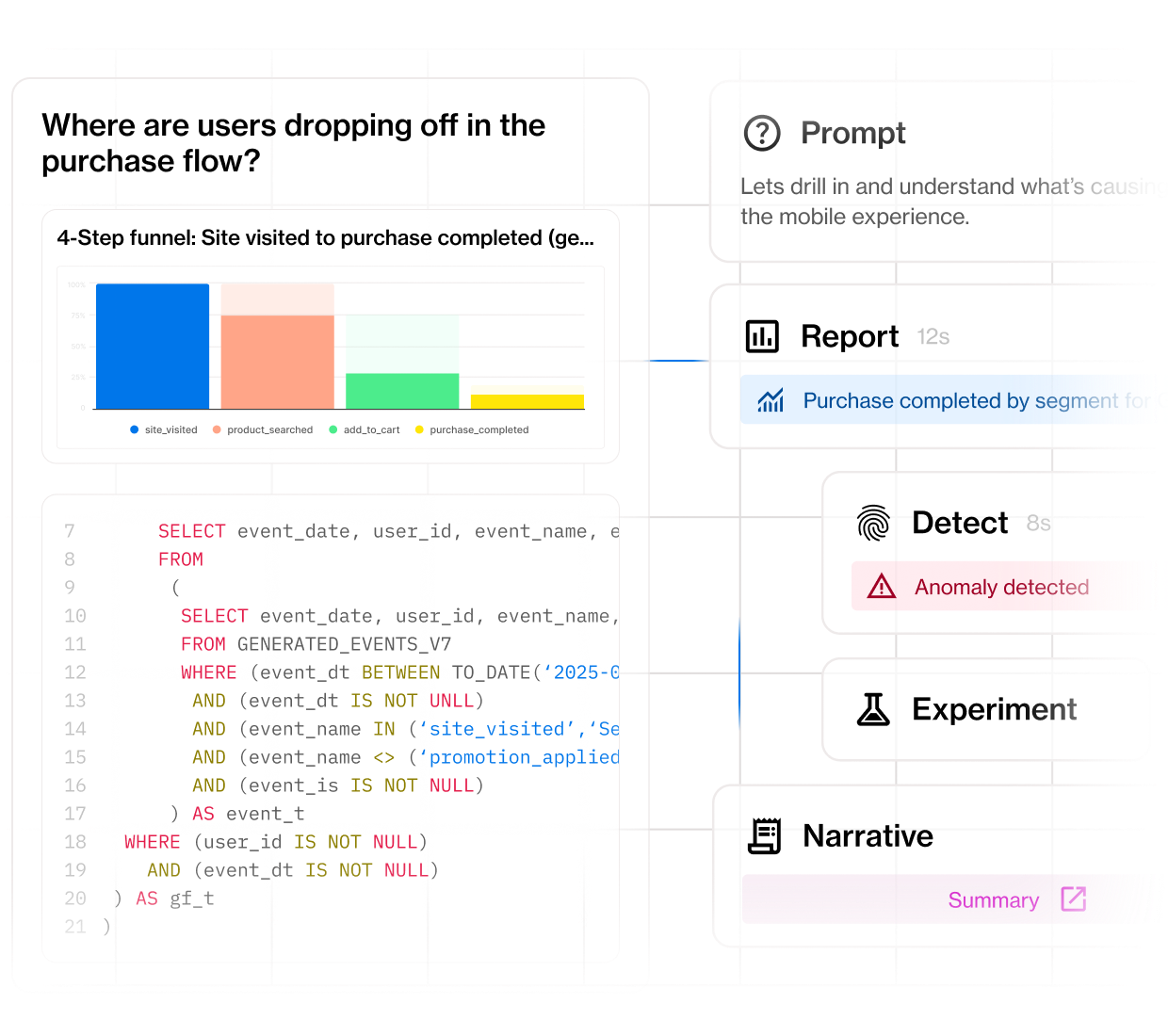
Access analytics through LLMs like Claude and GPT.

Learn from product, customer, and operational data in one place. 

Scale governance across your data ecosystem without surprise costs.

FAQs

What does “warehouse-native” mean?

Traditionally, digital analytics solutions required you to create a copy of your data and move the data into their proprietary data stores. 

Warehouse Native approaches this differently by running the analytics directly in the cloud data warehouse platforms like  Snowflake, Databricks or BigQuery. This means that there is no data movement, no data duplication, no new data pipelines. 

Warehouse Native solutions work by leveraging existing data in the warehouse and sending SQL queries directly to the warehouse. This means that the data is always up to date, users can inspect and validate the SQL statements that are sent. And the data in the analytics solution always matches what the data warehouse returns. 

What is warehouse-native analytics?

A warehouse-native analytics platform analyzes data directly from a cloud data warehouse, adding a layer of domain-specific semantic layer and governance that enable things like funnel metrics, user cohorts and retention curves. 

It also means that the warehouse-native analytics solutions do not require data movement or data duplication. The queries are always live on top of the warehouse.

Which cloud data warehouse should I use?

Kubit can integrate with any cloud data warehouse (CDW). We integrate with Snowflake, Databricks, Google BigQuery, Amazon Redshift, and more – if you can’t find your CDW on our integrations page, just let us know and we’ll work with you to make it happen.

Is warehouse-native cheaper than a legacy analytics platform?

Choosing warehouse-native analytics significantly reduces analytics costs. Data teams can eliminate ETL/ELT line items from their budget, stop paying for extra duplication and reprocessing costs, and reduce the number of tools in their analytics stack.

Do I need an ETL/ELT with warehouse-native analytics?

Kubit doesn’t move or replicate your data, so you don’t need an ETL/ELT at all to integrate Kubit.

Do I need an SDK?

No. SDKs are required when a vendor needs to store and manage your data inside their silo, capturing user details and events and moving them outside of your own warehouse. Since Kubit doesn’t replicate your data, you don’t need an SDK.

Get a demo

See Kubit’s warehouse-native analytics platform in action.

CTA Image

This website uses cookies to ensure you get the best experience on our website. Learn More